
NDT Level-II
Below is a complete, industry-standard NDT Level II Course Content covering LPT, MPT, UT, and RT as per ASNT, ISO 9712, SNT-TC-1A, and general oil & gas requirements.
If you want this in PDF format, lesson plan, exam questions, or slides, I can prepare that too.
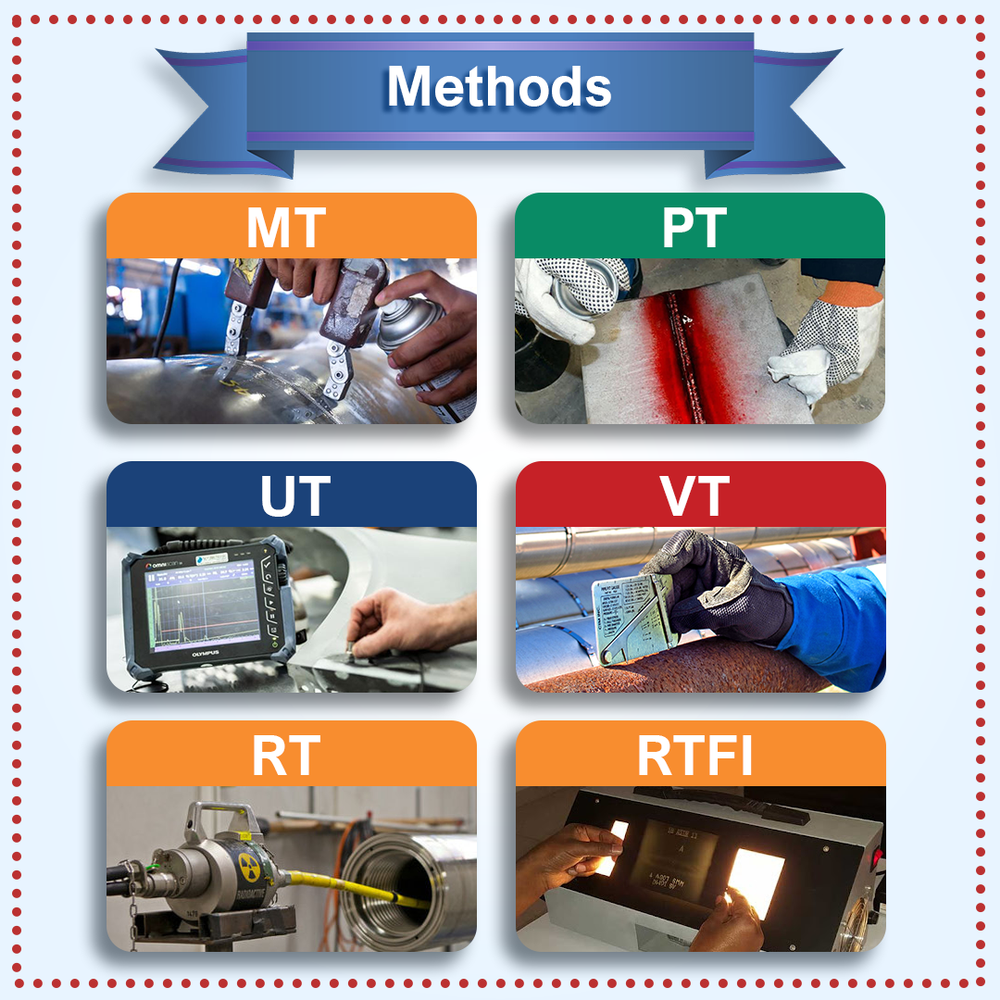
NDT Level-II
Methods Covered: LPT (PT), MPT (MT), UT, RT
Module 1 – General NDT Foundation (Common for all methods)
1.1 Introduction to NDT
• Purpose of NDT
• NDT vs destructive testing
• Role & responsibilities of Level II technicians
1.2 Codes, Standards & Specifications
• ASNT SNT-TC-1A
• ISO 9712
• ASME Section V
• AWS D1.1, API standards (if applicable)
1.3 Material and Product Knowledge
• Ferrous & non-ferrous metals
• Casting vs forging vs welding
• Heat treatment and effects on testing
1.4 Defect Types & Characteristics
• Surface & subsurface flaws
• Lack of fusion, porosity, slag, cracks
• Lamination, inclusions, fatigue cracks
Module 2 – Liquid Penetrant Testing (LPT / PT) Level II
2.1 PT Theory
• Principles of capillary action
• Sensitivity levels
• Penetrant types: fluorescent & visible
• Solvent removable, water washable, post-emulsifiable
2.2 Consumables
• Penetrants
• Cleaners
• Developers (dry, wet, non-aqueous)
2.3 PT Equipment
• UV lamps, light meters
• Cleaning tools
• Developer spray guns
2.4 PT Techniques
• Pre-cleaning
• Application of penetrant
• Excess penetrant removal
• Developer application
• Inspection under visible/UV light
2.5 Evaluation & Interpretation
• Indication vs defect
• Linear & rounded indications
• Acceptance standards
2.6 Procedure Development
• Preparing written instructions
• Report documentation
2.7 Practical Training
• Hands-on inspections
• Real components
• Reporting and documentation
3.1 MT Theory
• Magnetic fields
• Magnetization
• Flux leakage principle
• Types of magnetic materials
3.2 Equipment
• Yokes (AC/DC)
• Prod technique
• Multidirectional units
• Coils & central conductors
3.3 Media
• Dry powder
• Wet fluorescent
• Carrier fluids
3.4 Techniques
• Longitudinal & circular magnetization
• Yoke & prods
• AC/DC differences
• Field direction and adequacy of magnetization
3.5 MT Calculations
• Lift height
• Field strength
• Ampere-turns
3.6 Evaluation & Interpretation
• Indications vs discontinuities
• Acceptance criteria
3.7 Practical Training
• Magnetizing equipment setup
• Inspection on welds, castings, forgings
• Documentation and reporting
Module 4 – Ultrasonic Testing (UT)
4.1 UT Theory
• Sound waves & propagation
• Velocity, wavelength, frequency
• Reflection, refraction & mode conversion
• Dead zone, near zone, beam spread
4.2 Equipment
• Flaw detectors
• Probes: straight beam, angle beam
• Calibration blocks (V1, V2, IIW blocks)
4.3 Ultrasonic Techniques
• Straight beam testing
• Angle beam weld testing
• DAC, TCG & DGS curves
• Sensitivity & calibration
4.4 UT Calculations
• Sound path
• Skip distance
• Beam angle geometry
• Depth & location of flaws
4.5 Defect Evaluation
• Characterization of indications
• Signals from root cracks, sidewall cracks, slag, porosity
4.6 Procedure Development
• Written instructions
• Sensitivity settings
4.7 Practical Training
• DAC creation
• Weld scanning
• Thickness measurement
• Real-time flaw detection & reporting
Module 5 – Radiographic Testing (RT)
5.1 RT Theory
• X-ray & gamma radiation
• Radiation production
• Absorption & scattering
• Image formation principles
5.2 Equipment
• X-ray machines
• Isotopes (Ir-192, Co-60)
• Film types & screens
• Digital radiography (CR/DR)
5.3 Exposure Techniques
• SFD & SOD
• Geometric unsharpness
• IQI selection (penetrameters)
• Single-wall & double-wall techniques
5.4 Radiation Safety
• ALARA principles
• Dose limits
• Survey meters
• Controlled area & barriers
5.5 Film Processing
• Darkroom procedures
• Developer & fixer chemistry
• Film storage and handling
5.6 Film Interpretation
• Film density
• Sensitivity
• Evaluation of weld defects
• Acceptance standards
5.7 Practical Training
• Exposure setup (simulated)
• Film reading & defect identification
• Report writing
Module 6 – Level II Responsibilities
6.1 Duties of a Level II
• Set up equipment
• Conduct tests independently
• Report and interpret results
• Prepare written instructions
• Guide Level I personnel
6.2 Written Procedures & Reports
• Test procedures
• Inspection reports
• Calibration records
Module 7 – Certification Requirements
7.1 Training Hours & Experience
• PT: 32–40 hours
• MT: 32–40 hours
• UT: 80–120 hours
• RT: 80–120 hours
7.2 Examinations
• General theory
• Specific theory
• Practical exam
7.3 Vision Requirements
• Near vision test
• Color contrast sensitivity
Module 8 – Practical Workshops for All Methods
• Real components with known defects
• Hands-on testing
• Interpretation & evaluation
• Reporting exercises
• Mock Level II exams
© Copyright 2024 IMS NDT ACADEMY Design By Webfire Degitech